
Image capturing and 3D scanning play a crucial role in generating accurate 3D models for 3D printing applications. Various techniques exist to create a digital file of a physical object, but this article focuses specifically on 3D scanning solutions. When selecting the right scanner, multiple factors must be considered â€" the application, the object being scanned, the location, and the desired level of detail. Choosing the most suitable scanner ensures the best results for your specific needs.
From Photo Capture to Advanced 3D Scanning
One of the earliest and most accessible methods for generating 3D models was the photo-capturing technique. This involved taking multiple images of an object from different angles using a camera, then processing them with specialized software to generate a 3D model. While inexpensive and accessible, it lacked the precision required for professional applications.
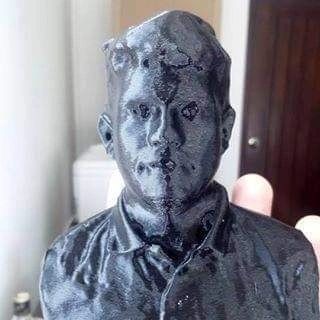 Photos captured using a mobile phone, model printed on a Thrimana 3D printer almost 9 years ago. Guess who this is?
A more advanced version is the photobooth scanner. I first encountered one in the UAE, owned by PRECISE 3D HUB Dubai, and later experienced another fully operational photobooth at Objex Unlimited in Toronto, Canada. Unlike single-camera scanning, photobooth scanners use multiple cameras positioned at various angles to capture a subject simultaneously. This significantly improves accuracy, precision, and colour detailing, making it ideal for high-quality 3D models. The technology is widely used in the figurine industry â€" so if you have ever wanted a miniature version of yourself, these services are worth exploring.
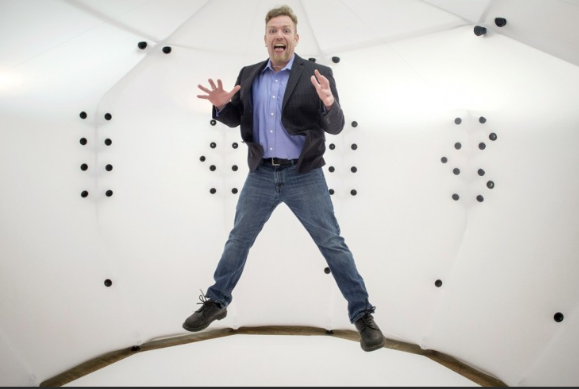 The 3D Photobooth at Objex Unlimited
How 3D Scanners Work
The function of a typical 3D scanner is illustrated below. Multiple optical sources project light patterns onto the object, and cameras capture these patterns from different angles to generate a point cloud in virtual space. By connecting each point, a mesh is formed, and a final 3D object can be exported.
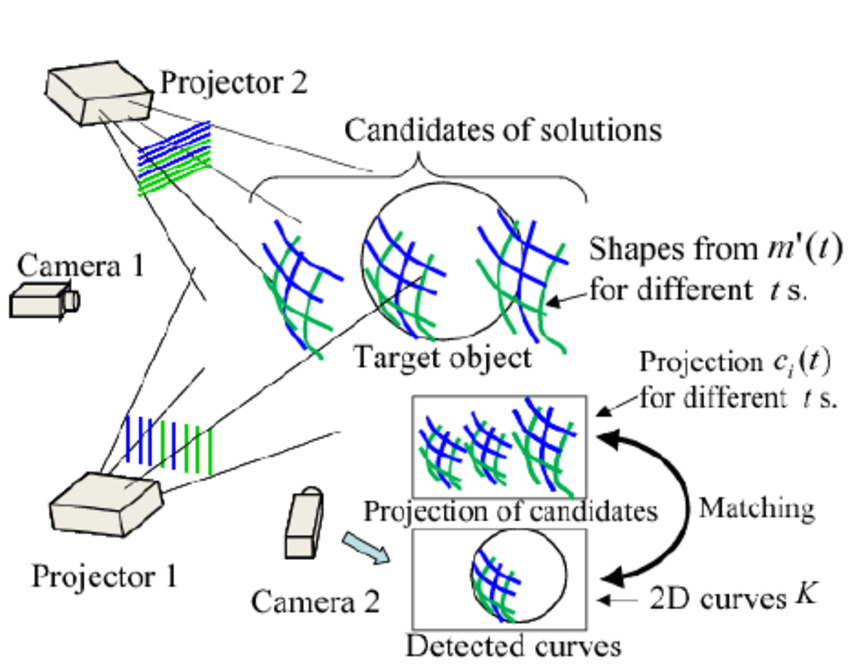 Image source: Multiview Projectors/Cameras System for 3D Reconstruction of Dynamic Scenes, Furukawa et al.
Types of 3D Scanners
There are three primary types of 3D scanners, each suited for different applications.
Structured Light Scanners are the most common due to their affordability and efficiency. These project structured light patterns onto an object and analyse distortions to create a 3D model. They are ideal for capturing detailed textures and colour information, making them well suited for product design, cultural heritage preservation, and medical prosthetics.
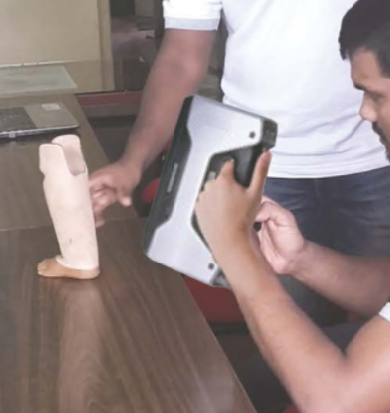 Scanning a prosthetic part using a Shining 3D scanner. Project conducted in 2019 with the National Hospital of Sri Lanka and RCS2 Technologies.
Laser-Based Scanners use laser triangulation to measure the distance between the scanner and the object, making them excellent for scanning reflective, dark, or intricate surfaces that structured light scanners struggle with. Their high precision makes them essential for industrial metrology, aerospace, and automotive quality control.
Infrared (IR) Scanners use invisible infrared light to capture 3D models, making them ideal for sensitive surfaces like the human body. Unlike structured light and laser scanners, IR scanners do not emit bright light, ensuring comfort for facial scanning, biometric security, and medical imaging applications.
Advanced and Hybrid Scanning Solutions
Modern 3D scanners now integrate multiple scanning techniques for increased versatility. For scanning highly reflective or dark metal surfaces while capturing fine textures, a combination of structured light and laser scanning provides the best results. For capturing human facial features with both comfort and accuracy, a structured light and IR scanning system is the ideal choice.
Another interesting combination is laser and infrared-based 3D scanners, particularly well suited for metrological scanning. While these do not capture texture due to the absence of a light source, they offer metrology-grade accuracy with multiple scanning modes: fast scanning, deep hole scanning, fine scanning, and overall scanning. One of the best examples is the SHINING 3D Freescan series.
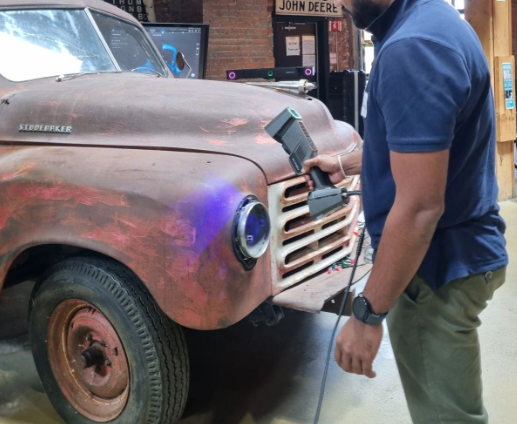 A car body scanned using the Shining 3D Freescan Combo
The Future of 3D Scanning
With rapid development in wireless technology and AI-driven processing, 3D scanners are becoming more portable, faster, and more efficient. Improvements in laser line count, higher-resolution sensors, and increased processing power allow scanners to capture more detail at greater speeds. Enhanced light sources and wider-angle camera systems have also expanded the field of view, making it easier to scan larger objects and areas effortlessly.
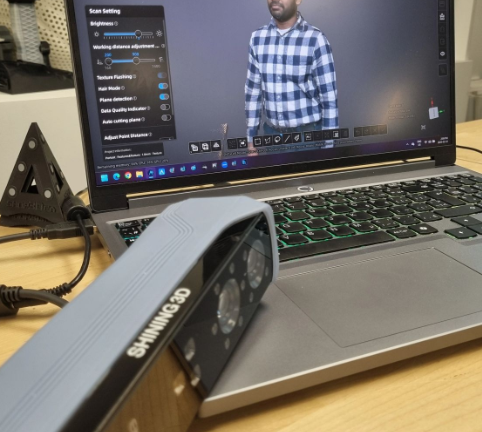 One of the fastest scanners I have experienced - Shining 3D EinStar
These advancements have revolutionised 3D scanning, making it more accessible, reliable, and adaptable across professional and industrial applications. Whether for engineering, medical imaging, or creative industries, today’s 3D scanning solutions provide unmatched accuracy and efficiency, pushing the boundaries of what is possible in reverse engineering and 3D printing.
Further reading and resources: