
Metal Fused Filament Fabrication (Metal FFF) is an additive manufacturing process used to produce complex metal parts using metal-bound composite filaments. This technique is particularly valuable when fast delivery times are crucial or when traditional manufacturing methods face limitations.
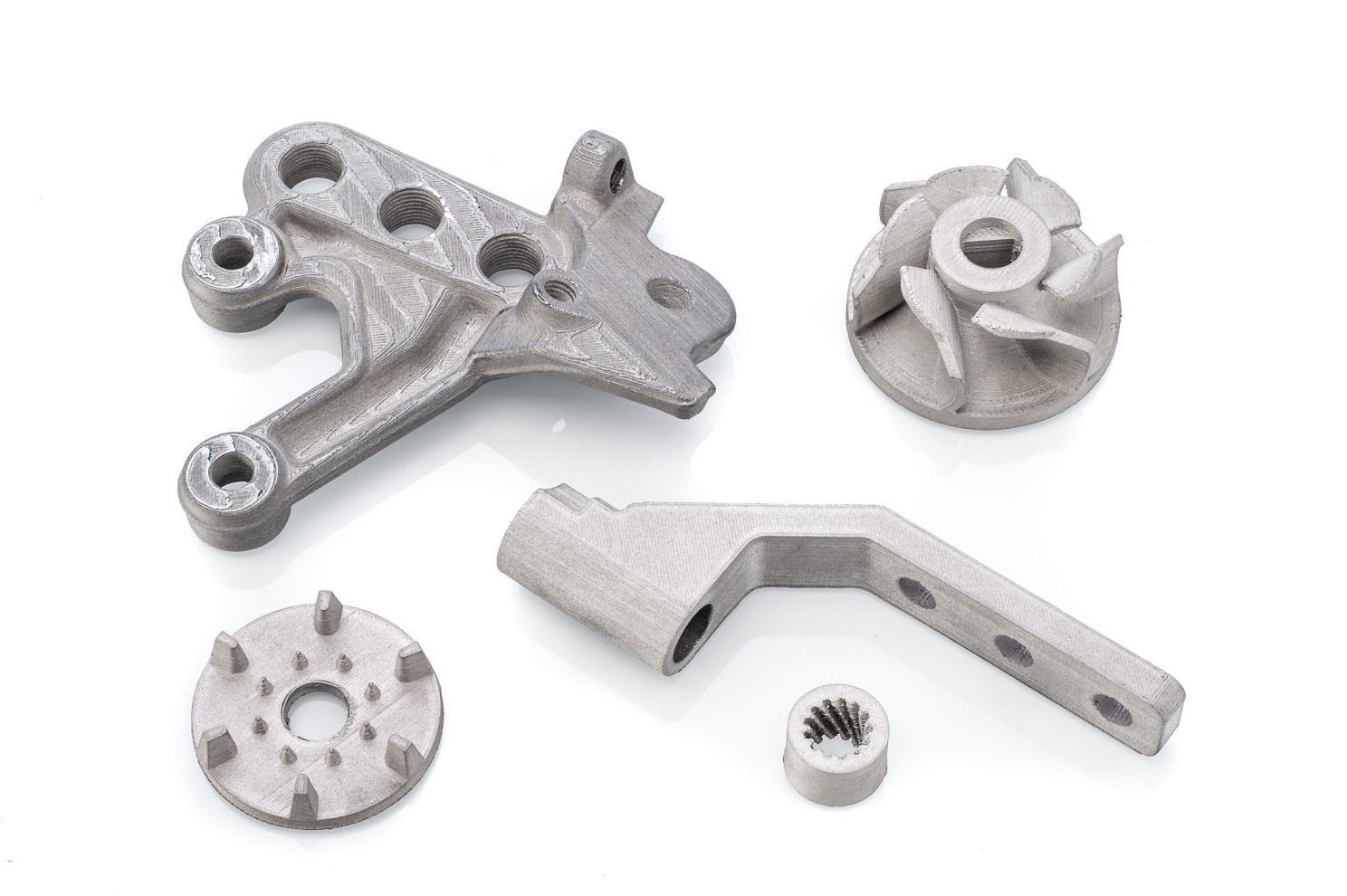 3D Printed Metal Parts
The process consists of three key stages: printing, debinding, and sintering. Industrial 3D printers such as UltiMaker, Raise3D Technologies, and Markforged are widely used for Metal FFF. One of the key advantages of this technique is that no special skills are required for the printing stage. However, the secondary steps, debinding and sintering, are critical for achieving the best results.
In Metal FFF, the printed part is called the “green part”, which consists of metal particles bound together by a polymer. During debinding, the polymer binder is removed, transforming the part into a porous and fragile structure known as the “brown part”. Finally, during sintering, the metal particles fuse together, resulting in a fully dense, finished metal component.

This write-up focuses on the critical factors influencing filament properties and the catalytic debinding process out of the three main methods, which play a key role in determining the final part quality and performance.
The main methods of debinding:
- Solvent
- Thermal
- Catalytic
Catalytic Debinding
Catalytic Debinding which involves the rapid decomposition of binders into volatile molecules in a catalyst atmosphere, is a fast debinding process. Forward AM developed and introduced this technique to the Metal FFF market and it has become an industry standard, with companies like XERION BERLIN LABORATORIES GmbH using it. Several factors affect the successful removal of binders, with material composition being a critical one.
 Metal Filament and Finished part
Composition of Metal Filament
Metal filaments are composed of 70%-80% metal and the rest of the polymer to bind the metal powder together. The catamold binder systems typically have two or more polymers to accommodate different functions in different stages.
The main binder comprises 50%-90% of the polymer, which will be removed during the debinding process. Low molecular weight materials are used to increase viscosity and minimize interference between larger particles. Backbone polymer constitutes up to 50% of the polymer and will not be removed until the sintering process. It helps hold the metal particles together, and thermoplastic is often used. Additives make up to 10% of the binder and serve to stabilize and disperse the binders through the metal particles.
 Picture Credit: Additive Manufacturing of Metallic and Ceramic Components by the Material Extrusion of Highly-Filled Polymers: A Review and Future Perspectives
Importance of the Distribution of Particles
The heterogeneous distribution of particles within the filament can have a significant impact on the proper debinding process. This can result in instability and incomplete removal of binders in the brown part. Additionally, sintered parts may exhibit surface cracks, internal pores, uneven shrinkage, and warping.
The material composition and uniformity of properties throughout the filament have a direct impact on the debinding process. It is crucial to choose an experienced and reputable manufacturer when selecting a metal filament supplier to mitigate potential challenges.