
What if one of the most critical pieces of equipment in an operating room could be built for a fraction of its commercial price, by anyone, anywhere in the world? That is exactly the question Rebecca Kaaya Nansubuga, a graduate student in Western University, Ontario, supervised by Dr. Joshua Pearce, is working to answer.
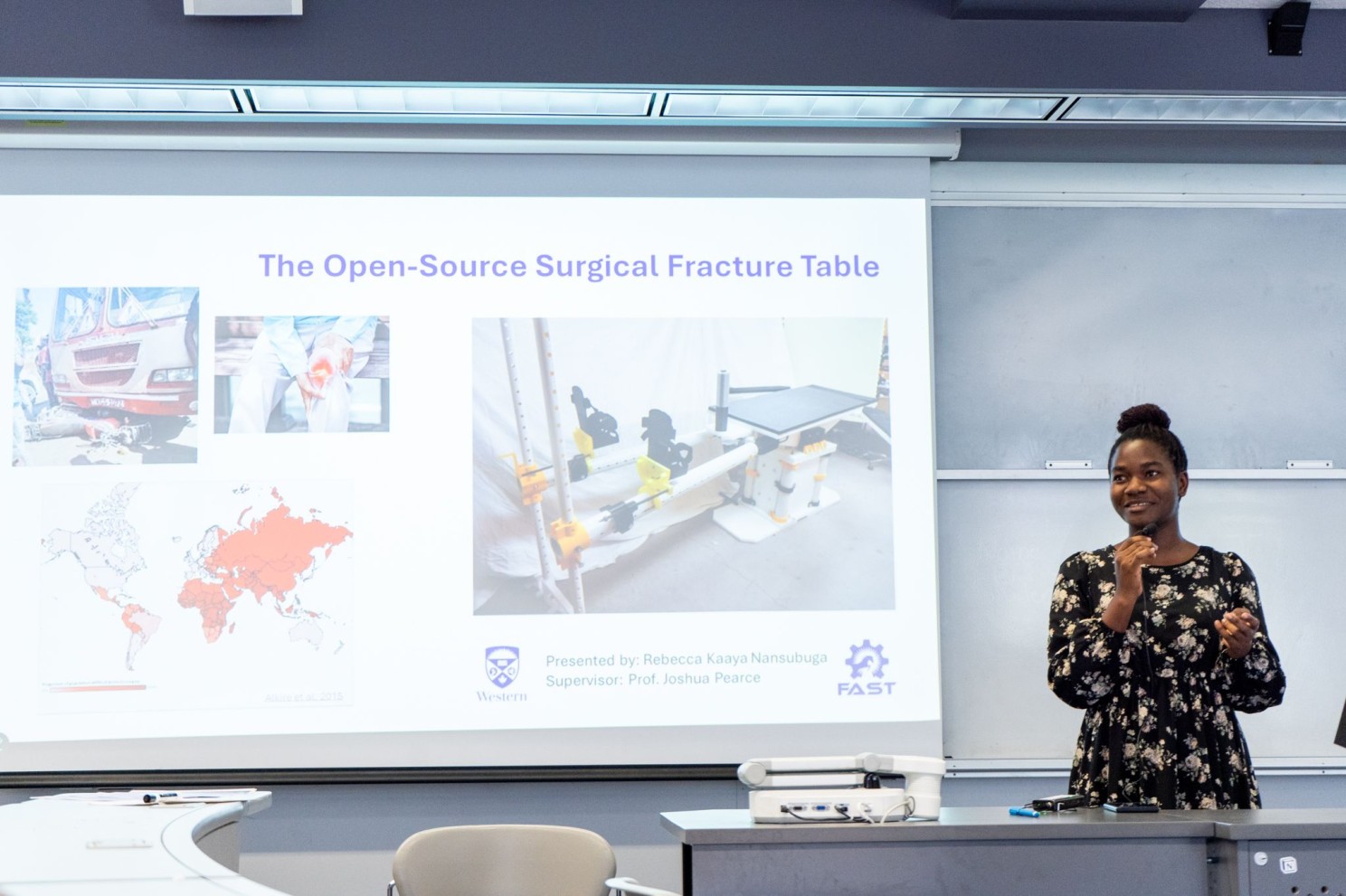 Rebecca sharing her vision with the research community
I recently sat down with Rebecca to talk about her research, and I have to say - this is one of the most compelling applications of additive manufacturing I have come across in the medical space.
The problem she is tackling is straightforward but sobering. Orthopedic surgical positioning tables - the specialized tables used to position patients during procedures - can cost up to $200,000 USD per unit. For many healthcare facilities, especially those in low-resource settings, that price tag is simply out of reach. And the cost does not stop at purchase. When something breaks, spare parts for older models are nearly impossible to find. Newer models require skilled technicians to be flown in from abroad under donor agreements just for routine maintenance. It is expensive, unsustainable, and leaves patients without access to the care they need. Rebecca’s answer? Design an open-source alternative - and 3D print the critical parts.
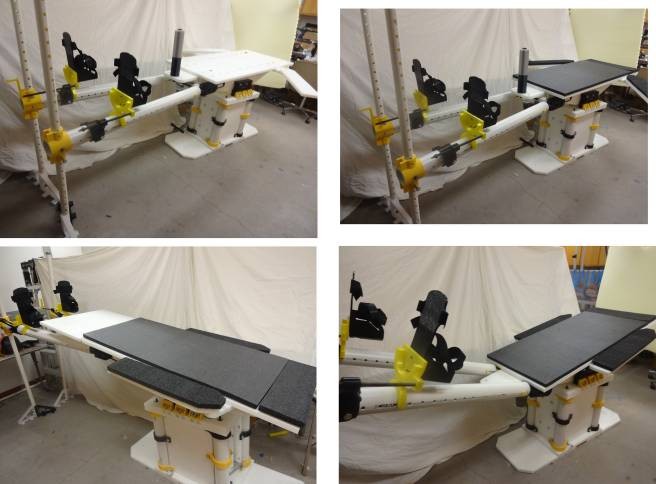 The prototype open-source orthopedic surgical positioning table J. K Baw et. el. 2022
Using FDM (Fused Deposition Modeling) technology, which she deliberately chose for its accessibility, Rebecca is developing a surgical positioning table that any facility with a desktop 3D printer can replicate. The design uses TPU for flexible components that come into contact with the patient’s body - reducing pressure and protecting soft tissue during long procedures, and PETG for structural parts, chosen for its durability over more brittle options like PLA. For non-printed parts, simple tools like laser cutters or even hand saws can be used, keeping the barrier to replication as low as possible.
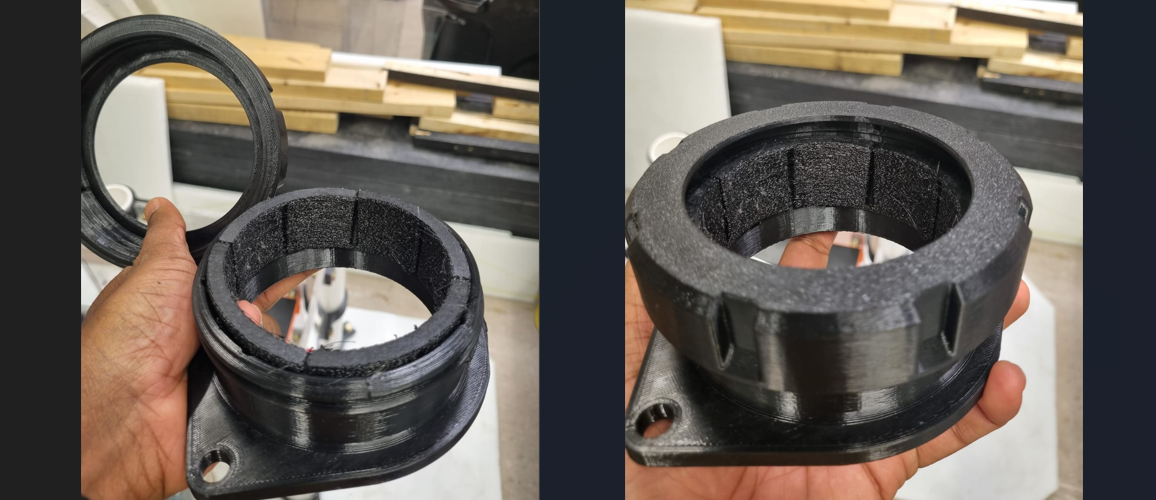 A rode holder printed in TPU with a fuzzy skin effect – enhancing grip and ensuring a secure, snug fit.
The design is intentionally open source. Anyone, anywhere, can access the files and build the table, without needing expensive equipment or imported expertise.
The project is already in an active prototype stage. Rebecca and her team started by reviewing an existing prototype, then systematically compared it against commercial models to identify any missing functionality. They brought in surgeons and operating theater staff to provide hands-on clinical feedback, and that input has directly shaped the redesigns now underway. A dedicated training component is also being developed so that local teams can maintain and repair the table themselves, breaking the cycle of dependency on outside support.
From a manufacturing standpoint, 3D printing has been a game-changer for this kind of iterative medical design work. Rebecca shared that some parts take over 25 hours to print, and yes, warping is a real challenge. Her practical solution? Gluing parts firmly to the print bed for the duration of the run. Simple, effective, and the kind of hard-won knowledge that only comes from actually doing the work. The ability to modify a complex component and reprint it the same day, at minimal cost, is something traditional manufacturing simply cannot match at this stage of development.
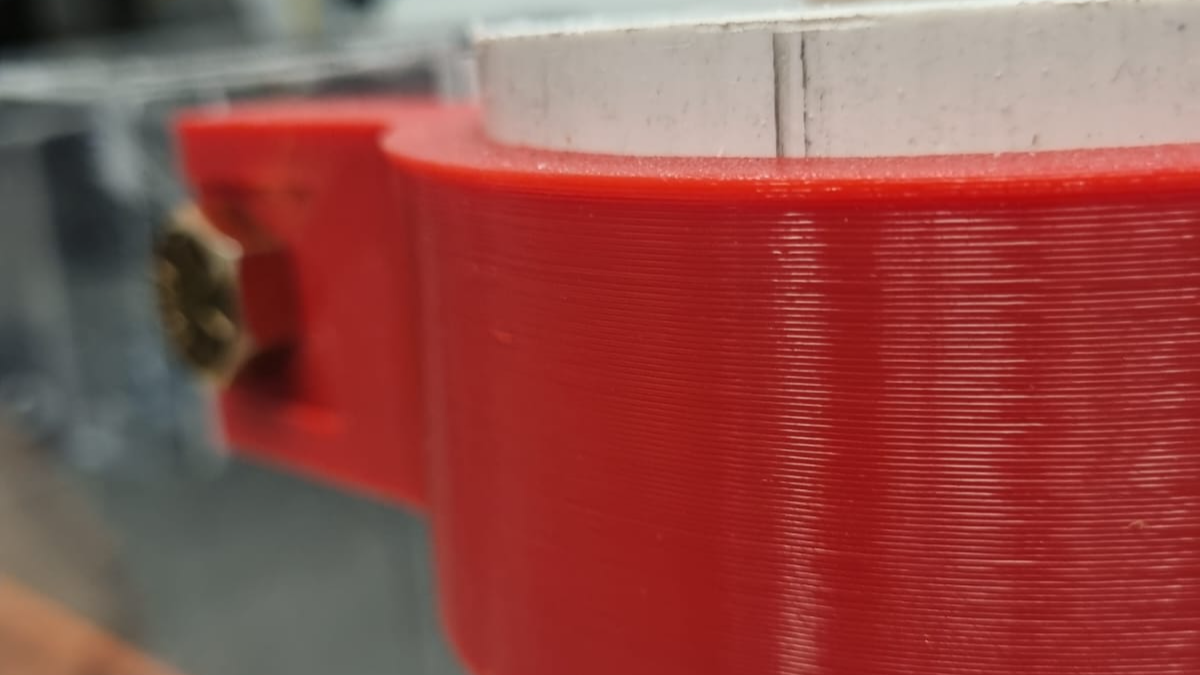 3D Printed parts in PETG
What strikes me most about Rebecca’s project is not just the engineering, but the philosophy behind it. Accessible materials. Open-source design. FDM technology that runs on machines costing a fraction of industrial alternatives. This is additive manufacturing being used not to make things faster or shinier, but to make them available to people who would otherwise go without.
That, to me, is what this technology is really capable of.
Are you working on a project where 3D printing is solving a real-world access or cost challenge? I would love to hear about it, drop a comment, or send me a message.
For more information, review their recent scientific Publication