
Bimetallic printing is one of those topics everyone in metal additive manufacturing seems curious about, and there is a growing body of research behind it. The gap, however, is specific: when it comes to wire laser metal deposition, almost no bimetallic research exists. Most labs and companies do not have access to a WLMD machine to begin with. Ayman Ahdy does.
Ayman is a graduate student in the Mechanical Engineering Program at Rochester Institute of Technology Dubai, and at the same time, a part-time AM professional at PRECISE, a pioneering additive manufacturing company in the UAE. That second role is what gives him access to a wire laser metal deposition machine, a technology that prints metal by feeding in wire and melting it with a laser. I sat down with him to talk about what he is doing with it.
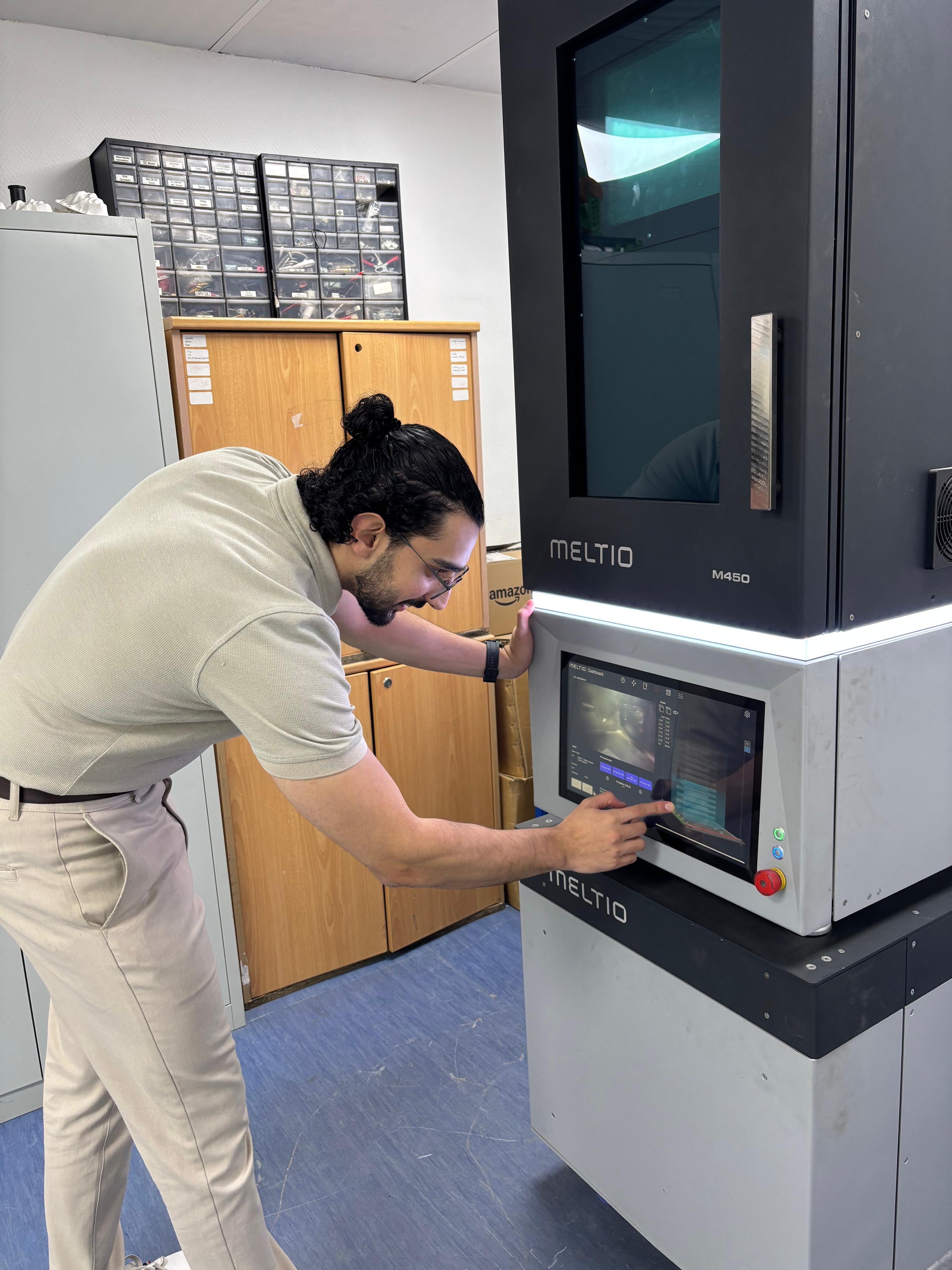 Ayman Ahdy at work with the Meltio wire laser metal deposition system at PRECISE, Dubai.
When I asked Ayman why he settled on this specific direction, he pointed to a gap he found while reviewing existing research. “There’s a big gap in any research regarding bimetallic behavior of the technology,” he said. While bimetallic research does exist using other metal technologies - addressing combinations of copper, Inconel, and stainless steel - almost none of it addresses WLMD specifically. That is the gap his work is targeting.
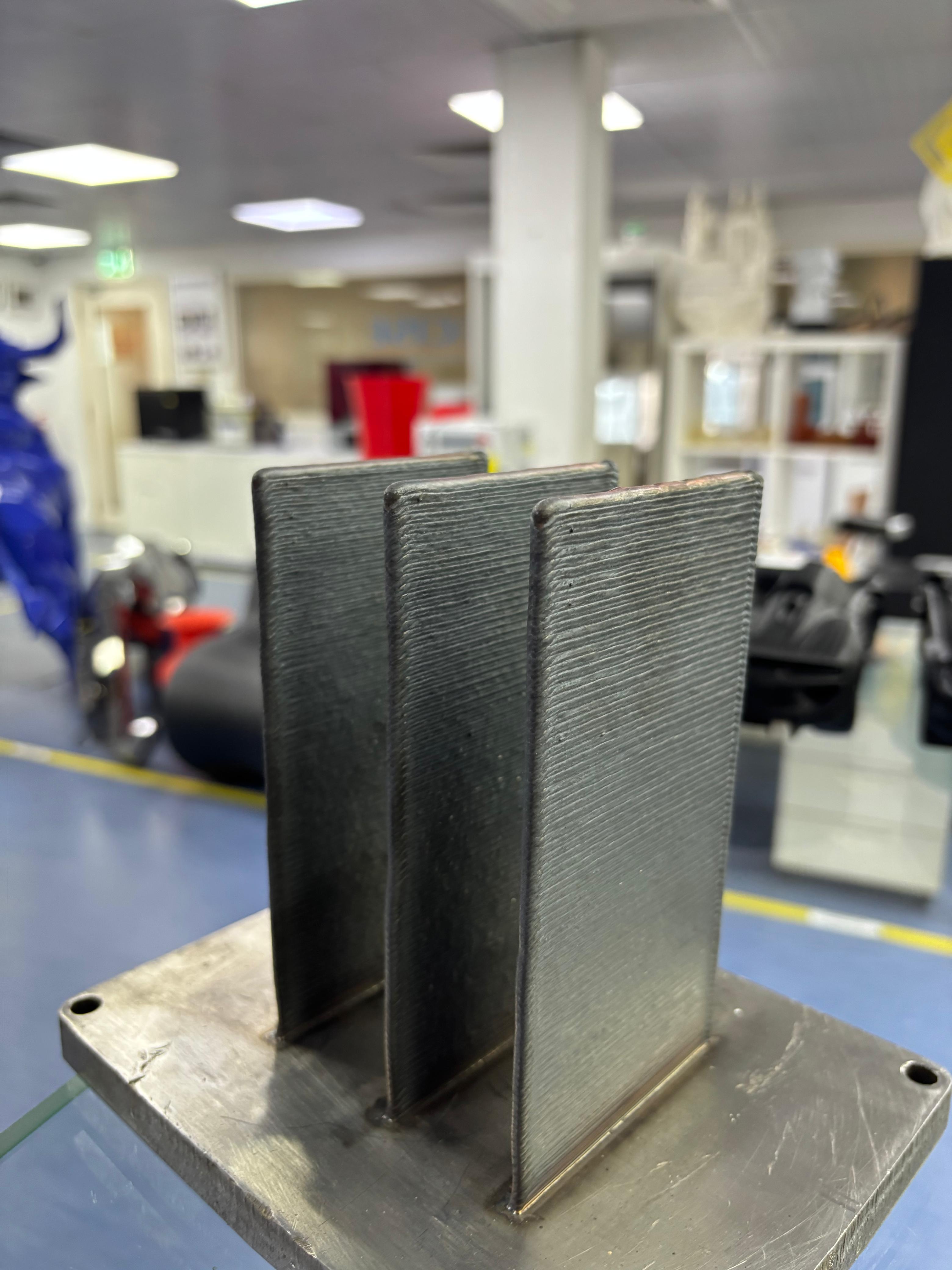 3D Printed part in Metal using Meltio printer
To start closing that gap, Ayman is studying three variables and how each one shapes the final part: laser power, which he has found has the largest impact on physical properties, annealing cycles to relieve internal stress built up during printing, and the bimetallic configuration itself, comparing simple top-down deposition against side-by-side placement and mechanical interlocking. He is measuring tensile strength, hardness, toughness, and microstructure across samples, using a microscope in-house and SEM imaging outsourced when needed. The work is being carried out under the supervision of Professor Salman Pervaiz.
The aim is not one finished paper but a working reference. Whoever is looking for bimetallic [printing] using wire laser metal deposition, they can start basically from what I am building, with the hope to make it openly available once the study is completed and ready to be published.
- Ayman
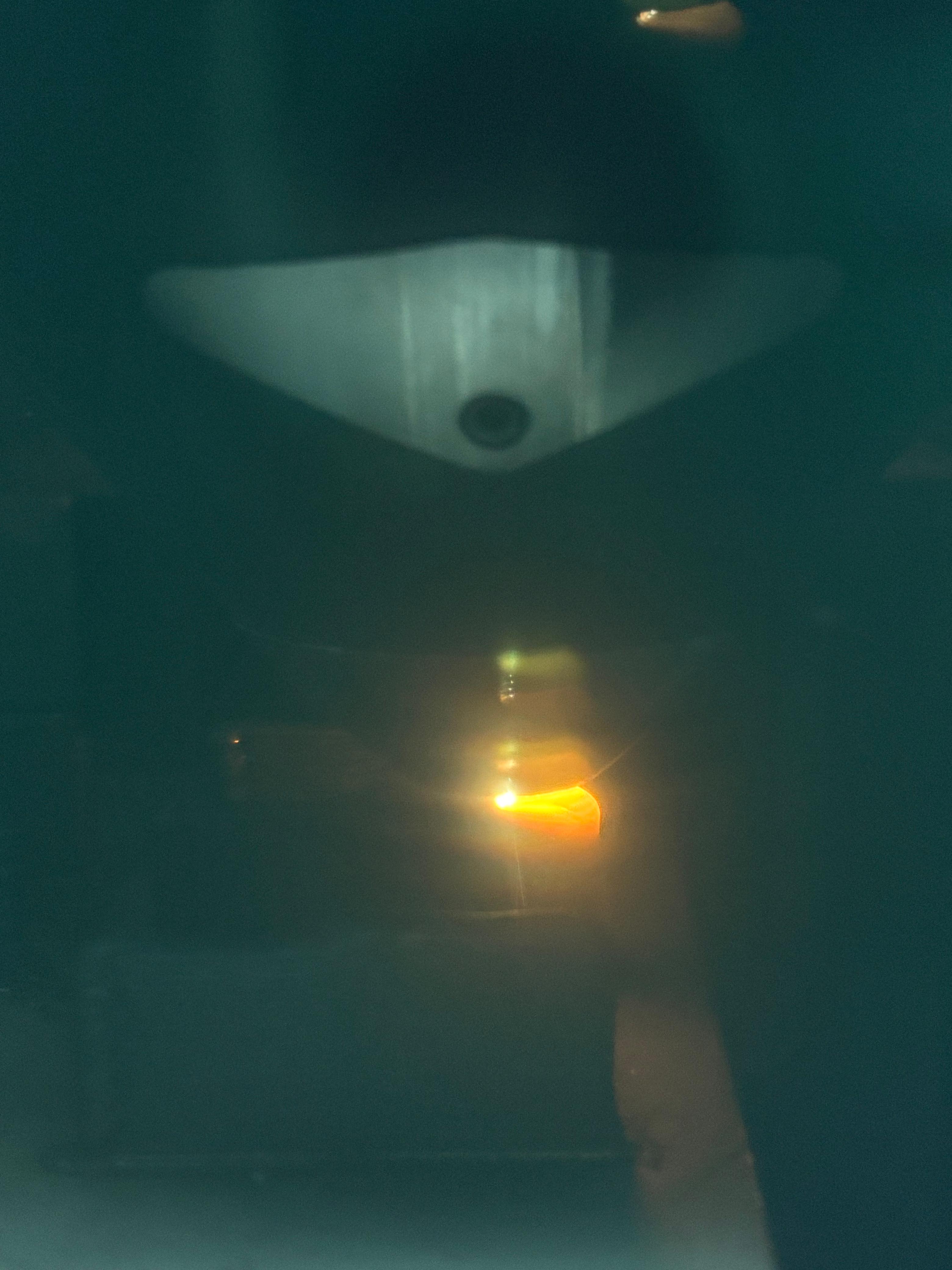 The Meltio printer mid-deposition - a focused laser melts metal wire and deposits it layer by layer onto the build plate.
One detail that stuck with me: the printing itself is the fast part. Everything after it takes the time. Parts are deposited on a substrate, then EDM wire-cut off the build plate, run through controlled furnace annealing, CNC polished since WLMD finishes rougher than powder-based methods, and finally water jet cut into test samples - a method chosen specifically because it does not induce internal stresses within the printed samples. Mechanical testing happens last, on a universal testing machine.
I wouldn’t say the printing takes long; it’s the annealing, the polishing, and the water jet cutting after that may consume most of the time.
- Ayman
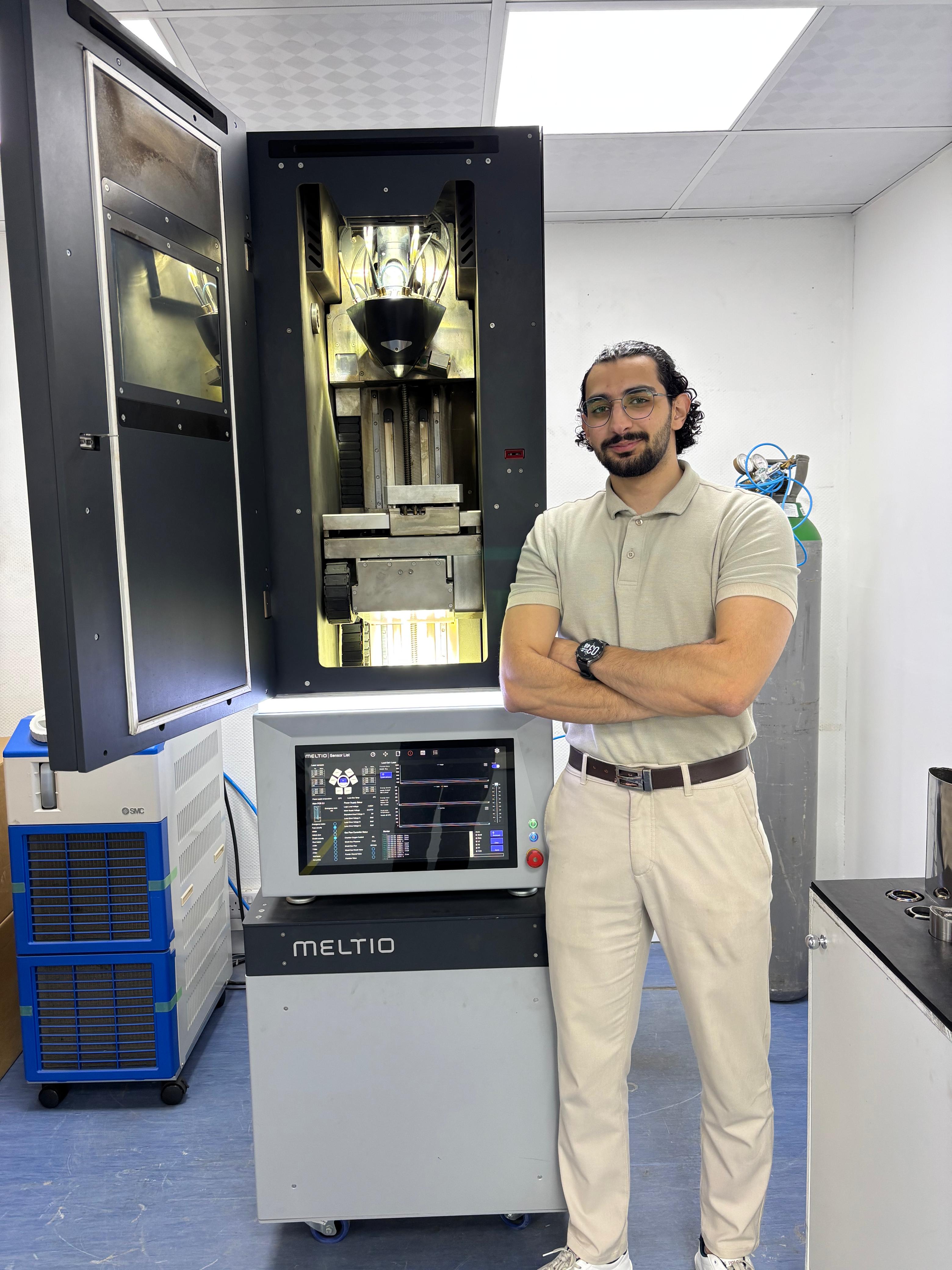
Looking forward, Ayman wants to extend this work toward more advanced material pairs, using copper-based bimetallics already established in aerospace as a reference point for where steel-based research could go next. For now, marine parts remain the clearest application: corrosion resistance where it counts, cheaper steel everywhere else, and a process that is finally being documented instead of reinvented every time someone with access to the right machine decides to try it.